
Reviewed · KAMPALA CITY WALKING TOURS
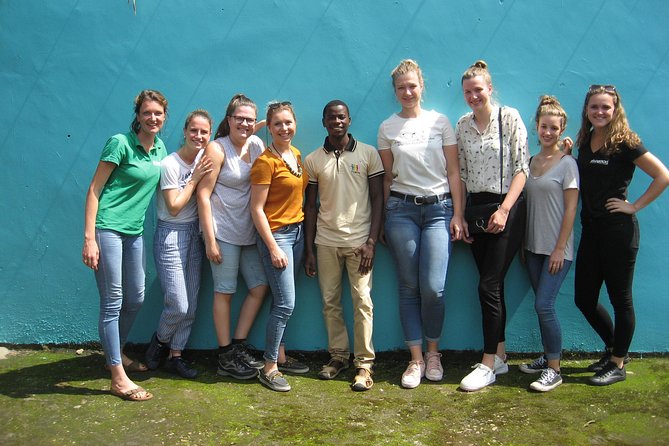
Steve Kampala Walking tours (Airpals Safaris tour)
Kampala reveals itself best on foot, and this tour takes you from a university gate to a slum neighborhood, a produce market, a Hindu temple, a chaotic taxi park, and a hilltop cathedral. It is not a polished monument tour. You get a look at the city as people use it every day, with plenty of traffic, trade, history, and sharp contrasts.
I like the small group of no more than 10 people, which makes it easier to ask questions and keep up in crowded streets. I also like the range of stops: the Independence Monument gives you Uganda’s political story, while Nakasero and Owino markets show how food, clothing, and commerce work in modern Kampala.
The main caution is pace and consistency. The advertised duration is about four hours, but one guest reported finishing in three, and the quality can depend on the guide and the energy of the day. Some stops may feel brisk, with less explanation than you hoped for.
In This Review
- Key points to know before you book
- What this Kampala walk is really trying to show you
- Starting at Makerere University
- Katanga offers a difficult but important contrast
- Shopping at Bagala Craft
- Uganda’s story at the Independence Monument
- Tasting Kampala at Nakasero Market
- The architecture of Temple SSDM
- Uganda’s wartime connection at the World War II Memorial
- Seeing Kampala move at the Old Taxi Park
- Owino Market and the realities of shopping
- Ending on the hill at Namirembe Cathedral
- What the guides add to the experience
- Is $28 a fair price?
- Practical advice for a smoother walk
- Who should book this Kampala walking tour?
- Should you book Steve Kampala Walking Tours?
- FAQ
- How long is the Kampala walking tour?
- How large is the group?
- Which guides may lead the tour?
- What places does the tour visit?
- Is Kasubi Tombs included?
- Can I cancel for a refund?
Key points to know before you book
- A broad city sampler: You move through university grounds, informal housing, markets, monuments, transport hubs, and places of worship in one half-day.
- Small groups matter: The group is capped at 10, useful in crowded markets and busy central streets.
- Guides may vary: Steve is the named host, while Getrude and Ben have also led tours, so the tone and commentary may differ.
- The route is local rather than grand: This is built around daily Kampala life, not a long list of major museum interiors and palace visits.
- Expect a lot of walking: The tour covers 10 stops in roughly four hours, so comfortable shoes and a steady pace are important.
- Value depends on the day: At $28, the price is fair for a strong guide and a full half-day, but less attractive if the tour ends early or feels rushed.
What this Kampala walk is really trying to show you
This experience is a quick education in how Kampala fits together. You see a city shaped by education, colonial-era and post-independence politics, religious communities, trade, public transport, and steep hills.
The route does not simply take you from one grand building to another. It puts formal institutions beside informal settlements, then moves into markets and transport centers. That contrast is the central idea of the walk.
You may begin at Makerere University, one of the city’s best-known institutions, then continue through Katanga, where the setting is far more crowded and informal. Later, you reach the Independence Monument and World War II Memorial before plunging into the noise of Kampala’s markets and taxi park.
I find that approach useful during a first visit. Kampala can feel confusing at street level, especially if you arrive without a sense of its neighborhoods or public transport. A local guide can explain what you are seeing and help you understand how the pieces connect.
The experience is not designed for travelers who want a slow, highly polished tour with long visits inside every attraction. It is better for you if you want to cover ground, ask questions, and see ordinary city scenes that you might not find on your own.
More kampala city walking tours in Kampala:
- Kampala Walking City Tours (Women Guided)
★ 5.0 · 115 reviews - Kampala Walking Tour (3 Hours) with Optional Gaddafi Mosque Visit
★ 5.0 · 112 reviews - Inside Kampala Walking Tour (Female Guided)
★ 5.0 · 52 reviews
Starting at Makerere University
The meeting point is the main gate of Makerere University. The university visit lasts about 15 minutes and is more of an orientation walk than a full campus tour.
That short stop gives you a starting point for Uganda’s educational and political story. Your guide can place Kampala in a wider national setting before the route moves into denser city areas.
Do not expect a long academic presentation or access to every part of the campus. The value is in seeing the university as part of Kampala’s working city, not as a separate attraction.
If you have limited time in Kampala, this opening also helps you get your bearings quickly. You are introduced to a major local institution before walking into a very different neighborhood.
Katanga offers a difficult but important contrast
The route continues to Katanga, described as a slum area, for about 20 minutes. This is one of the most serious parts of the tour, and you should approach it with respect.
The purpose is not sightseeing in the usual sense. You are shown how people live in a part of the city that has fewer resources and a very different physical setting from Kampala’s formal commercial districts.
One guest described this section as emotional and humbling. That reaction makes sense, but the experience will depend heavily on how your guide explains the area and how the group behaves.
Use your judgment with photography. Ask before taking pictures of people, homes, shops, or children, and listen carefully to your guide’s instructions. A responsible visit should help you understand the setting without turning residents into scenery.
This stop can be valuable because it pushes beyond the usual visitor route. It can also feel rushed or uncomfortable if the guide offers little context. If this part matters to you, tell Steve or your guide that you want a thoughtful explanation rather than a quick walk-through.
Shopping at Bagala Craft
Bagala Craft is presented as Kampala’s largest craft market, with about 20 minutes set aside for shopping. You can expect a selection of souvenirs and locally made craft items.
Twenty minutes is enough for a first look, but not enough for an unhurried shopping session. If you see something you like, you may need to decide quickly, compare prices, and keep an eye on the group’s schedule.
The stop works best if you already know what you want. It is a practical place to look for gifts, but the tour is not a dedicated craft workshop or buying expedition. You will have more time to browse if the rest of the group is ready to move on promptly.
A useful benefit of going with a local guide is the chance to ask about prices and suitable purchases. Still, make your own decisions and do not feel obliged to buy. The tour price does not include shopping expenses.
A few more Kampala trips to weigh up
- Kampala’s Best Experience walking tour
★ 5.0 · 137 reviews - Kampala: City Guided walking sightseeing Tour
★ 4.7 · 52 reviews - Kampala Heart of Walking Adventure
★ 5.0 · 43 reviews - Inside Kampala walking tour (Female guided)
★ 5.0 · 40 reviews
Uganda’s story at the Independence Monument
At the Independence Monument, the group sits for about 20 minutes to discuss Uganda before and after independence and the meaning of the monument.
This is one of the strongest history stops on the route because it gives the walking tour a clear political center. Rather than treating the monument as a quick photo stop, the guide is expected to explain why it matters.
The quality of this section will depend on the guide’s ability to connect facts with the city around you. Past guests have especially valued the political and geographical background provided during the walk.
You should ask questions here. If you are curious about Uganda’s path to independence, the role of Kampala, or the monument’s symbolism, this is the natural point to speak up. The stop is short, so a focused conversation is more useful than trying to cover every period of national history.
Tasting Kampala at Nakasero Market
Nakasero Market is a 15-minute stop focused on fruit and other food grown in Uganda. The country produces much of its own food, and this market gives you a quick look at that side of the economy.
The best part is the sensory change. After monuments and institutional buildings, you are among produce stalls and everyday shopping. You can observe the colors, textures, and range of fruit while learning how local food reaches the city.
The schedule allows time to taste and look, but not to study the market in detail. If you want to buy fruit, ask your guide how much time is available before making a purchase.
This is also a good moment to slow down mentally, even if the overall walk keeps moving. Markets often explain a city better than a formal display because they show what people buy, sell, eat, and carry home.
The architecture of Temple SSDM
The Temple SSDM Shree Sanatan Dharma Mandal is a short 15-minute visit. The group goes inside to see the temple’s architecture and decoration.
This stop adds a religious and cultural layer to the route. It reminds you that Kampala is not shaped by one faith or one community. The temple’s design also offers a welcome visual break from markets, traffic, and concrete streets.
Because the visit is brief, it is best viewed as an introduction rather than a detailed religious tour. Dress and behave respectfully, follow any instructions at the entrance, and let the guide explain what you are seeing.
The temple is especially useful for you if you prefer a city tour that includes places of worship and community life, not just political monuments.
Uganda’s wartime connection at the World War II Memorial
The World War II Memorial receives about 10 minutes. Here, the guide explains how Uganda participated in the war and discusses both positive and negative results.
It is a small stop, but the subject widens the tour beyond local landmarks. Uganda’s connection to global events is easy to overlook when you are focused on markets and traffic. This monument offers a reminder that the country’s past is tied to international power and conflict.
Ten minutes does not allow for a long lecture. Think of it as a concise history lesson and a prompt for questions. If military history interests you, you may want to ask for more detail while you are there.
Seeing Kampala move at the Old Taxi Park
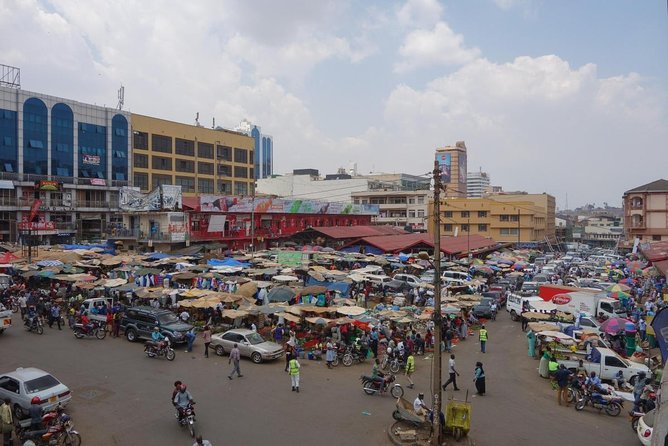
The Old Taxi Park is one of the most visually striking parts of the walk. It is a major commuter-taxi center, with thousands of taxis competing for passengers in a tightly packed urban setting.
This is where Kampala’s energy becomes hard to ignore. Vehicles, passengers, drivers, and pedestrians all work within a system that may look chaotic at first but serves as a vital part of city life.
You will probably spend only about 10 minutes here. That is enough to observe and take in the scene, but not enough to understand every route or transport habit. Stay close to your guide and keep your belongings secure in crowded areas.
I like this stop because it shows function rather than decoration. The taxi park is not there for visitors. It is there because people need to get across Kampala, and watching it operate gives you a practical sense of the city’s daily rhythm.
Owino Market and the realities of shopping
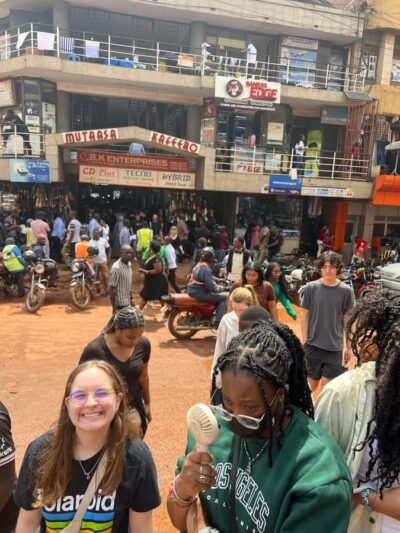
Owino Market, also called Kampala Market, is described as the city’s largest market. It is known for secondhand clothing and a wide range of other goods. The scheduled visit is about 15 minutes.
This is another place where the tour’s purpose is observation. You may see an enormous variety of merchandise and get a sense of how central markets serve people across the city.
The short timing is the main limitation. Fifteen minutes can feel like a quick pass through a large and crowded place, especially if you want to browse or ask about specific goods.
Keep your attention on your guide, your route, and your belongings. You should also avoid blocking stalls or photographing people without permission. The market is a place of work first, and that matters.
Ending on the hill at Namirembe Cathedral
Namirembe Cathedral sits on a hill and offers a broad view over Kampala. The planned visit lasts about 10 minutes, making it a short but fitting end to the main walking route.
After moving through markets, roads, and crowded transport areas, the elevated position gives you space to look back across the city. It is a good place for photographs and for understanding Kampala’s hills.
The endpoint information needs a little attention. The stated end is Namirembe Cathedral, but the tour details also say that the first part ends there and the second part ends at Kasubi Tombs. Kasubi Tombs is not listed as one of the 10 timed stops, so confirm the exact ending and any transport between sections before booking.
If Namirembe is your final stop, arrange your next ride in advance if possible. One past guest appreciated Steve’s help with an Uber, which suggests the guide may offer practical assistance, but transport arrangements are not included in the tour details.
What the guides add to the experience
Steve is the named guide, and several other guides, including Getrude and Ben, may lead the walk. Getrude has been praised for her city and history commentary, while Ben has been described as friendly and well informed about Kampala’s culture and past.
The strongest guide experience here is personal and practical. Steve has helped with transport problems, suggested ways to get around, recommended 2K’s restaurant, taken photographs, and assisted one guest with buying a Rolex. Those small acts can make a major difference during a first day in Kampala.
The experience is not perfectly uniform. One guest felt the commentary sounded memorized and that some stretches involved too much quiet walking. That person also found the ending abrupt and the tour shorter than expected.
For the best result, participate actively. Tell your guide what interests you, ask for more detail at the Independence Monument or markets, and explain any physical limitations early. A guest with mobility concerns found that Steve adjusted to their needs, but you should still be realistic about the amount of walking and uneven city conditions.
Is $28 a fair price?
The cost is $28 per person, with a maximum group size of 10. There are no separate admission charges listed for the stops, though you will need extra money for crafts, food, or other purchases.
At that price, I think the tour can be good value if you receive a full, well-paced four-hour experience with engaged commentary. You are paying for a local escort, route planning, historical context, and help navigating places you might not choose to enter alone.
The value drops if the walk finishes after only three hours or if several stops receive little explanation. A self-guided route could cover some of the same public places, but it would not necessarily give you the same context or confidence in markets and transport areas.
The small group helps justify the price. You are not one person in a large crowd, and the guide can respond to your questions. Still, the experience is more worthwhile for you if you value local orientation and conversation than if you only want landmark photographs.
Practical advice for a smoother walk
Choose comfortable shoes and allow for a steady four-hour outing. The route includes markets, hills, crowded public areas, and neighborhoods where you will want to stay alert.
Bring water and modest spending money. You may want fruit at Nakasero or souvenirs at Bagala Craft, but shopping is optional and not part of the tour fee.
A morning or afternoon departure is available. Pick the time that best matches your energy and other plans, since the route covers a lot of ground in a short window.
Keep your phone charged for the mobile ticket and for arranging transport afterward. Service animals are allowed, public transportation is nearby, and most people can participate, but the tour is still a walking experience rather than a vehicle-based city tour.
Free cancellation is available if you cancel at least 24 hours before the start time. Cancellations within 24 hours are not refunded, and poor weather or failure to reach the minimum group size may lead to a different date or a full refund.
Who should book this Kampala walking tour?
I would choose this for a first visit, especially if you want a quick introduction before exploring Kampala independently. It suits curious, active visitors who want markets, public transport, local neighborhoods, history, and religious architecture in one outing.
It is also a good match if you prefer everyday city life to a standard parade of palaces, mosques, and museums. The route is designed to show how Kampala works, including parts of the city you might not enter alone.
I would be more cautious if you need a slow pace, long time at each stop, or polished interpretation at every location. The schedule is tight, and the actual finish may be shorter than advertised. If the experience feels quiet or hurried, the $28 price may seem high.
Should you book Steve Kampala Walking Tours?
Book it if you want breadth, local access, and a useful first orientation to Kampala. The best version of this tour gives you a clear political background, a close look at markets and transport, a hilltop city view, and practical help from a friendly local guide.
Before paying, confirm who will lead the tour, how long it will run, and whether Kasubi Tombs is included after Namirembe Cathedral. Once the walk begins, ask questions and say what you want to understand. That can turn a fast route into a much more rewarding experience.
At $28, I see it as a reasonable choice when the guide is engaged and the full route is delivered. It is not a guaranteed perfect outing, but for a visitor who wants to meet Kampala on its own terms, it offers a useful and often memorable introduction.
FAQ
How long is the Kampala walking tour?
The tour is advertised as approximately four hours. The route includes 10 stops, though one guest reported that the experience ended after about three hours.
How large is the group?
The tour has a maximum of 10 participants, making it a small-group experience.
Which guides may lead the tour?
Steve is the named guide, and Getrude or Ben may also lead the experience depending on the day.
What places does the tour visit?
Stops include Makerere University, Katanga, Bagala Craft, the Independence Monument, Nakasero Market, Temple SSDM Shree Sanatan Dharma Mandal, the World War II Memorial, Kampala Old Taxi Park, Owino Market, and Namirembe Cathedral.
Is Kasubi Tombs included?
The tour information says the first part ends at Namirembe Cathedral and the second part ends at Kasubi Tombs, but Kasubi Tombs is not included among the 10 timed stops. Confirm the arrangement with the provider before booking.
Can I cancel for a refund?
You can cancel at least 24 hours before the start time for a full refund. Cancellations made within 24 hours are not refunded. If poor weather or an insufficient number of participants causes cancellation, you may receive another date or a full refund.
Just added around Kampala
- Uganda Equator Tour From Kampala To Kayabwe★ 5.0 · 4 reviews
- Uganda: 1-Day Murchison Falls Park Safari with Boat cruise★ 5.0 · 3 reviews
- Entebbe kampala airport transfers★ 5.0 · 3 reviews
- 3-Day Mind Refreshing in Murchison Falls National Park★ 5.0 · 4 reviews
- 3 Days Uganda Gorilla trek Safari Tour★ 5.0 · 4 reviews
- Weekend Package B★ 5.0 · 7 reviews
- Uganda 4 days Gorilla Trekking★ 5.0 · 3 reviews
- 15 Day Gorillas, Chimps and Big 5 Safari Tour★ 5.0 · 5 reviews
Kampala City Walking Tours, compared.
Kampala Walking Tour (3 Hours) with Optional Gaddafi Mosque Visit
Read the review →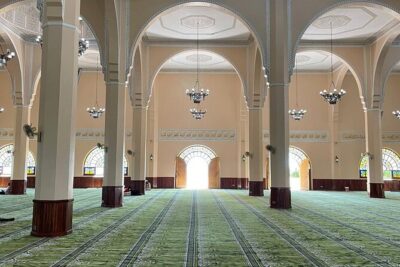

Browse the lists this tour appears in