
Reviewed · FOOD & DRINK
Cooking Class for Typical Ugandan Food in Kampala
Uganda’s food culture comes into focus when you handle the ingredients yourself. At this four-hour home cooking class, Gertrude guides you through peeling, slicing, cooking, and eating traditional vegetarian dishes, including matooke, with banana leaves playing a useful part in the process. You are not just watching a demonstration. You are helping make lunch.
I like the personal scale, with groups limited to 10 people, and I like the chance to learn about everyday plants rather than only sitting down to a finished meal. Gertrude and her son also bring a warm, family-style touch, with time for conversation, dancing, and stories.
The main consideration is the meeting point. Steve Residence is in Nansana, outside central Kampala, so you should allow time for the journey and confirm the directions before setting out. This is also a vegetarian experience, which is ideal for plant-based food fans but less suited to anyone looking for meat dishes.
In This Review
- Key points at a glance
- What the four-hour Kampala cooking class feels like
- Meeting Gertrude at Steve Residence in Nansana
- Starting with cassava, yams, pumpkin, and plantains
- Preparing matooke with banana leaves
- Cooking sauces and learning the local plant-based table
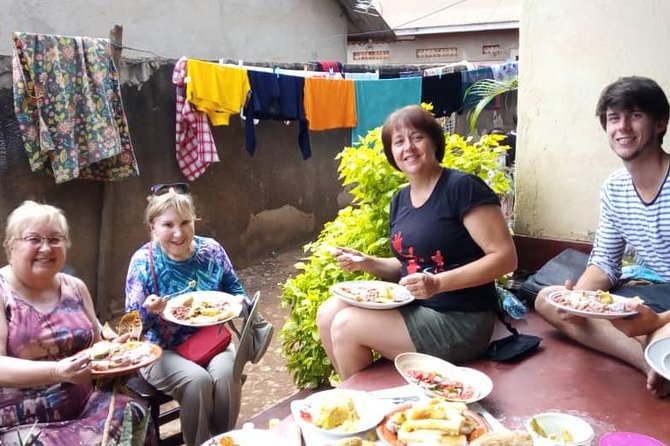
- Sitting down to eat what you prepared
- The value of a $32 half-day experience
- Who will enjoy this class most
- Practical details before you book
- Should you book the Kampala cooking class?
- FAQ
- Where does the cooking class begin and end?
- How long does the experience last?
- What kind of food will I prepare?
- Is the class suitable for vegetarians?
- How many people can join the class?
- Is the class near public transportation?
- Can I cancel for a full refund?
Key points at a glance
- Traditional ingredients: Work with cassava, yams, pumpkin, plantains, and matooke.
- Hands-on cooking: Peel, slice, process, and cook the food yourself rather than watching from the side.
- Banana-leaf methods: Learn how local cooking uses banana leaves in food preparation and serving.
- Small-group setting: The class accepts no more than 10 people, keeping the session personal.
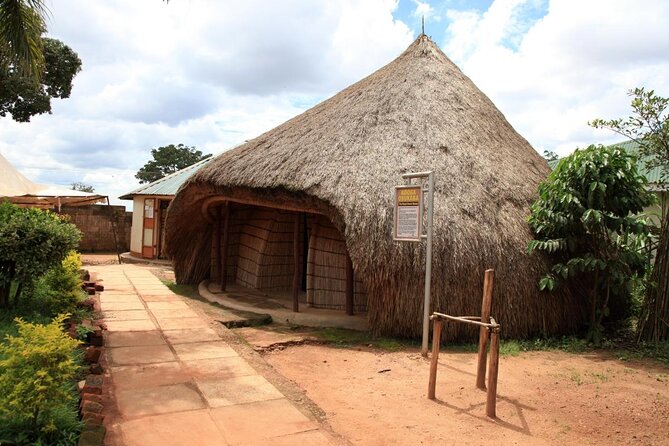
- Home-style welcome: Gertrude and her son host the activity at Steve Residence in Nansana.
- Shared meal: Sit down together and eat the vegetarian dishes you helped prepare.
What the four-hour Kampala cooking class feels like
This class is best understood as a practical introduction to Ugandan home cooking. You spend roughly half a day with Gertrude, working through local produce and preparing a meal from start to finish.
The food is purely vegetarian. That means the class focuses on staple vegetables, starchy foods, plantains, and sauces rather than meat or fish. For you, that makes the experience especially useful if you enjoy plant-based cooking or want recipes you can attempt again at home.
The group limit matters. With no more than 10 people, you should have a better chance to take part in the preparation instead of standing behind a crowd. A small class also leaves more room for questions about ingredients, cooking methods, and the role food plays in daily life.
This is not a polished restaurant demonstration. The appeal is its ordinary, home-based setting. You get close to the basic work of Ugandan cooking: handling the produce, preparing it carefully, waiting for it to cook, and sharing the result.
A few more Kampala trips to weigh up
- Private Ugandan Food Cooking Class and Culture Experience
★ 5.0 · 6 reviews - Like a local cooking Tours
★ 4.0 · 4 reviews
Meeting Gertrude at Steve Residence in Nansana
The class begins and ends at Steve Residence, on Little Muheji School Road in Nansana, Uganda. The activity is near public transportation, but the supplied meeting information does not provide a detailed route from central Kampala.
I would treat the address as an important part of your planning. Nansana is not the same as arriving at a central Kampala attraction, so check the meeting instructions carefully and leave enough time for the trip. One especially helpful detail is that Gertrude has been able to assist with arranging transportation to her home, but you should confirm this directly before booking your day around it.
Once you arrive, the setting is a private residence rather than a formal culinary school. That changes the mood. You are visiting a local home, and the class includes personal conversation alongside the cooking.
The property also offers views that can add a pleasant pause while the food cooks. One participant specifically appreciated the chance to take photos from the residence. Since the class takes place at a home, though, you should approach it with the manners you would use when visiting someone’s family, not as a quick commercial stop.
Starting with cassava, yams, pumpkin, and plantains
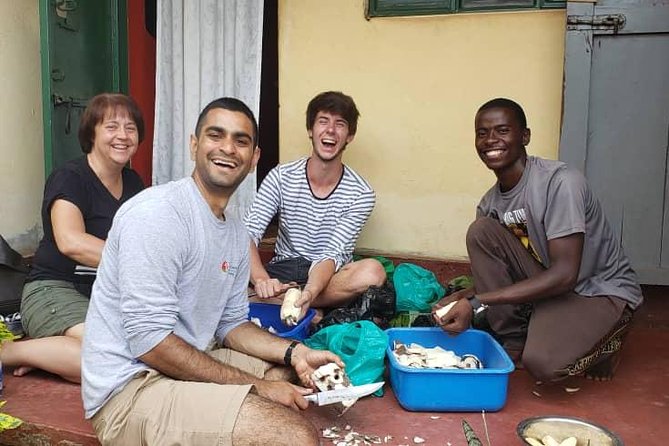
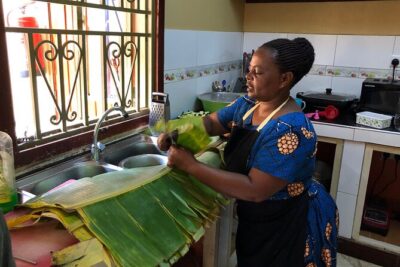
The preparation work begins with local produce. You can expect to peel and slice ingredients such as cassava, yams, pumpkin, and plantains before they go into the cooking process.
That first stage is more useful than it may sound. Starchy roots and plantains can behave differently from the vegetables you use at home, and preparing them gives you a closer sense of their texture and purpose. You are learning which foods form the base of a meal, not just memorizing the name of a finished dish.
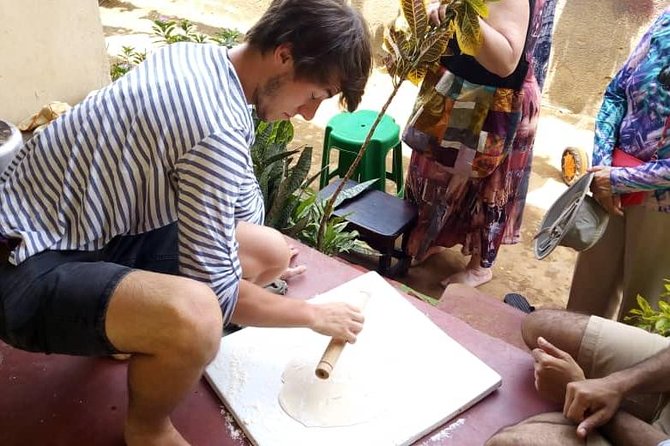
The work is also shared. You help with the preparation while Gertrude explains how the vegetables are handled and cooked. This gives you a practical lesson that a recipe card cannot provide, especially when local methods depend on touch, timing, or the condition of the produce.
You may find the peeling and slicing takes more time than expected. That is part of the point. The class presents cooking as a complete household task, not a quick activity designed only for photographs.
Preparing matooke with banana leaves
Matooke is one of the key dishes connected with the class. It is a staple made from plantains, and the process introduces you to a food that has an important place in Ugandan meals.
Banana leaves are used in the traditional preparation and handling of food. You get to see how they fit into the method, rather than encountering them only as decoration on a plate. This is one of the most memorable elements of the experience because it links the ingredient, the cooking process, and the final presentation.
For someone who cooks at home, the banana-leaf technique may be the part you most want to remember. You can recreate the dish in your own kitchen, though the exact equipment and ingredients available at home may differ. The class gives you a working idea of the method, while your own attempt will require some adjustment.
Matooke can also be a good conversation starter. As you prepare it, Gertrude can explain how local plants are used in everyday life. The class therefore offers more than a list of Ugandan recipes. It connects the meal to the plants and food habits around it.
Same country, a completely different kind of safari:
- 3 Hours Guided Cycling Tour Across Lake Victoria
★ 5.0 · 151 reviews - Kampala’s Best Experience walking tour
★ 5.0 · 137 reviews - 3 Days gorilla trekking Safari tour in Uganda
★ 5.0 · 121 reviews - Lake Victoria Island Cycling Tour from Kampala
★ 5.0 · 120 reviews
Cooking sauces and learning the local plant-based table
The meal includes several vegetarian staple dishes, and the groundnut sauce receives special attention. It was singled out as a favorite part of the meal, which makes it a good dish to watch closely and ask about during the class.
Groundnuts are a familiar ingredient in many parts of African cooking, but the finished sauce can taste very different from peanut sauces you may already know. Here, it is paired with the rest of the Ugandan meal, so you learn how a sauce works with the staples rather than tasting it alone.
Gertrude explains how the vegetables are cooked as the class moves forward. You can ask about the steps that matter most to you, including how the ingredients are processed and how the dishes are served.
The cooking period is also when the social side of the class comes alive. Time is available for chatting, dancing, and sharing stories with Gertrude and her son. One of the pleasures of a home cooking class is that the meal does not feel separated from ordinary conversation. You are cooking, waiting, talking, and getting to know the people hosting you.
Sitting down to eat what you prepared
At the end, you sit down and eat the food prepared during the workshop. This gives the class a clear payoff, but it also lets you judge how the separate ingredients work together in a traditional meal.
I like this format because the meal has a sense of completion. You have seen the produce before it was prepared, helped with the cooking, and then tasted the result. That sequence makes it easier to remember the dishes later.
The meal is vegetarian, so you should book with that in mind. If you are happy with plant-based food, the menu gives you a focused look at several Ugandan staples. If you specifically want to learn how meat is prepared, this class will not meet that goal.
The shared table is also part of the cultural experience. You are not simply handed a takeaway portion at the end. You eat together, which gives the final stage a relaxed, social feel.
The value of a $32 half-day experience
At $32 per person, the class offers more than a meal. You are paying for about four hours of instruction, ingredient preparation, a sit-down lunch, and time with a local host in her home.
That is good value if you want active participation. A standard restaurant meal might let you taste Ugandan food, but it would not show you how cassava, yams, pumpkin, plantains, or matooke are prepared. It would also miss the banana-leaf work and the personal conversation.
The price is less compelling if you only want a quick introduction to local cuisine. Four hours is a meaningful block of time, and the trip to Nansana adds to the day’s commitment. You should book this for the process, not just for the plate at the end.
The small group improves the value. With a maximum of 10 people, the class is designed to keep you involved. That matters when the main benefit is learning by doing.
Who will enjoy this class most
I would recommend this experience to anyone who likes food with a strong local connection. It suits people who want to handle ingredients, ask questions, and learn how a household meal comes together.
It is particularly well matched to:
- Plant-based eaters who want to explore vegetarian Ugandan dishes.
- Home cooks looking for recipes and methods to try after returning home.
- Families and small groups who enjoy a social activity with a personal host.
- Culture-focused visitors who want more than a quick meal in a restaurant.
- People with a free half-day who are comfortable making the trip to Nansana.
You may want to choose another activity if you dislike hands-on food preparation, need a central Kampala meeting point, or want a menu that includes meat. The class also requires good weather, so a change of date or a refund may be offered if poor conditions cause cancellation.
Practical details before you book
The activity lasts approximately four hours and ends back at the meeting point. Confirmation is received when you book, and the class accepts a maximum of 10 people.
Plan around the local meeting point rather than assuming hotel pickup is included. The stated start is Steve Residence, Little Muheji School Road, Nansana. Since transportation arrangements may be possible through Gertrude, ask about them before the day of the class.
The experience is booked, on average, eight days ahead. That is a useful sign that you should not leave it until the last morning if it is a priority for your Kampala schedule.
Free cancellation is available when you cancel at least 24 hours before the start time. Cancellations or changes made less than 24 hours ahead are not accepted for a refund. The cut-off follows local time, so check the timing carefully if you are booking from another country.
Should you book the Kampala cooking class?
Book it if you want a friendly, hands-on look at Ugandan food and you are willing to spend a half-day at a private residence in Nansana. The strongest reasons are the small group, the chance to work with local produce, the banana-leaf methods, and the shared vegetarian meal with Gertrude and her son.
I would skip it if your main aim is a central Kampala activity, a short tasting, or meat-based cooking. For the right visitor, though, $32 buys a useful food lesson and a personal connection that is hard to get from a restaurant menu alone.
FAQ
Where does the cooking class begin and end?
The class begins at Steve Residence, Little Muheji School Road, Nansana, Uganda. The activity ends back at the same meeting point.
How long does the experience last?
The cooking class lasts approximately four hours.
What kind of food will I prepare?
You will prepare typical Ugandan vegetarian food. Ingredients and dishes include cassava, yams, pumpkin, plantains, matooke, and groundnut sauce.
Is the class suitable for vegetarians?
Yes. The cooking class is described as purely vegetarian and focuses on plant-based Ugandan recipes.
How many people can join the class?
The activity has a maximum of 10 participants.
Is the class near public transportation?
Yes. The meeting point is described as being near public transportation.
Can I cancel for a full refund?
You can cancel for a full refund if you cancel at least 24 hours before the experience start time. Changes or cancellations made less than 24 hours before the start are not accepted for a refund. If poor weather causes the activity to be canceled, you will be offered another date or a full refund.
More Workshops in Kampala
- Kampala: Hands-On Chocolate Making Experience
★ 4.9 · 18 reviews
More Food in Kampala
- Kampala: Three-Hour Food Tour
★ 4.6 · 15 reviews - Nighttime Boda Boda Street Food Tour
★ 5.0 · 6 reviews - Fishing Village Food Tour & Luwombo Stop
★ 5.0 · 3 reviews
Just added around Kampala
- Uganda Equator Tour From Kampala To Kayabwe★ 5.0 · 4 reviews
- Uganda: 1-Day Murchison Falls Park Safari with Boat cruise★ 5.0 · 3 reviews
- 3-Day Mind Refreshing in Murchison Falls National Park★ 5.0 · 4 reviews
- Entebbe kampala airport transfers★ 5.0 · 3 reviews
- 3 Days Uganda Gorilla trek Safari Tour★ 5.0 · 4 reviews
- Weekend Package B★ 5.0 · 7 reviews
- Uganda 4 days Gorilla Trekking★ 5.0 · 3 reviews
- 15 Day Gorillas, Chimps and Big 5 Safari Tour★ 5.0 · 5 reviews
Food & Drink, compared.

Private Ugandan Food Cooking Class and Culture Experience
Read the review →
Browse the lists this tour appears in